August 3, 2003
To: Comer School Development
Program
From: Maura Larkins
by FAX only to: 203 737 1023
Three years ago I wrote several E-
mails to Beverly Crowther asking
for help. My school had paid
between ten and twenty thousand
dollars to Comer SDP, but the
Comer process was abused at my
school, and a culture of hostility
toward those outside the ruling
clique increased in intensity after
the implementation of the Comer
process. Democracy was
eliminated when voting was
eliminated. “Consensus” meant
that teachers were pressured to
silently accept what the ruling
clique wanted. Many teachers
were fired or forced to leave the
school.
Beverly Crowther failed to give
any help. She said we had to
work things out ourselves. Things
went from bad to worse. After two
years, the teachers voted to
eliminate the Comer Program, but
not before so much damage was
done that there is a serious
lawsuit pending.
The media here has not become
aware of this situation, however, if
Comer SDP is at all interested in
learning about how the misuse of
the Comer program wreaked
enormous harm in one school,
you may call or fax me at 619 660
6955. It occurs to me that you
might want to prevent such
outcomes in the future.
To: Comer School Development
Program
From: Maura Larkins
by FAX only to: 203 737 1023
Three years ago I wrote several E-
mails to Beverly Crowther asking
for help. My school had paid
between ten and twenty thousand
dollars to Comer SDP, but the
Comer process was abused at my
school, and a culture of hostility
toward those outside the ruling
clique increased in intensity after
the implementation of the Comer
process. Democracy was
eliminated when voting was
eliminated. “Consensus” meant
that teachers were pressured to
silently accept what the ruling
clique wanted. Many teachers
were fired or forced to leave the
school.
Beverly Crowther failed to give
any help. She said we had to
work things out ourselves. Things
went from bad to worse. After two
years, the teachers voted to
eliminate the Comer Program, but
not before so much damage was
done that there is a serious
lawsuit pending.
The media here has not become
aware of this situation, however, if
Comer SDP is at all interested in
learning about how the misuse of
the Comer program wreaked
enormous harm in one school,
you may call or fax me at 619 660
6955. It occurs to me that you
might want to prevent such
outcomes in the future.
James P. Comer Program
Child by child?
One child at a time?
Or was it rather no children at any
time were the focus when the
Comer process was adopted at
Castle Park Elementary?
One child at a time?
Or was it rather no children at any
time were the focus when the
Comer process was adopted at
Castle Park Elementary?
At Loma Verde Elementary
in CVESD, union leader Jim
Groth and his sidekick
Donna Padilla took control of
the school using the Comer
program.
Shortly afterward, the
principal was fired by Libia
Gil, perhaps for allowing the
Comer program to slip out of
the control of the top-down
machinery that Libia Gil
constructed at CVESD.
Ironically, Gil's methods
included little communication
with schools. The principal
was simply expected to stay
in control.
in CVESD, union leader Jim
Groth and his sidekick
Donna Padilla took control of
the school using the Comer
program.
Shortly afterward, the
principal was fired by Libia
Gil, perhaps for allowing the
Comer program to slip out of
the control of the top-down
machinery that Libia Gil
constructed at CVESD.
Ironically, Gil's methods
included little communication
with schools. The principal
was simply expected to stay
in control.
The Castle Park Elementary
fiasco was partly a result of
the way the James Comer
Program was implemented.
The Comer process lends itself
readily to those who wish to
abuse it.
fiasco was partly a result of
the way the James Comer
Program was implemented.
The Comer process lends itself
readily to those who wish to
abuse it.
What happened at
Chula Vista Elementary
School District (CVESD)
Chula Vista Elementary
School District (CVESD)
August 13, 2008
Phone call Ann L
Phone call Ann L
BLOGS
August 30, 2003
Dr. Ann L.
Comer School Development
Program
by FAX only to: 203 737 1023
Dear Dr. L.:
I’m writing to thank you for
calling me recently.
As I told you on the phone,
the school about which I
wrote in the summer of 2000
is Castle Park Elementary
School, and the district I am
suing is Chula Vista
Elementary School District.
I’m not asking you to do
anything; I only wanted to
give you a heads up in case
you wanted to investigate the
abuses caused by the
implementation of the Comer
Process at Castle Park. I’ll
leave it up to you to decide
whether you want to take any
action regarding this matter.
Please feel free to write or
call if you need any help from
me.
Yours truly,
Maura Larkins
Phone and fax: 619 660 6955
Dr. Ann L.
Comer School Development
Program
by FAX only to: 203 737 1023
Dear Dr. L.:
I’m writing to thank you for
calling me recently.
As I told you on the phone,
the school about which I
wrote in the summer of 2000
is Castle Park Elementary
School, and the district I am
suing is Chula Vista
Elementary School District.
I’m not asking you to do
anything; I only wanted to
give you a heads up in case
you wanted to investigate the
abuses caused by the
implementation of the Comer
Process at Castle Park. I’ll
leave it up to you to decide
whether you want to take any
action regarding this matter.
Please feel free to write or
call if you need any help from
me.
Yours truly,
Maura Larkins
Phone and fax: 619 660 6955
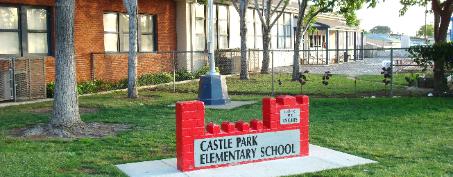
Problems at schools with
Yale's James Comer Program
Yale's James Comer Program
Curriculum Vitae
9/23/2009
James P. Comer, M.D.
Yale University Child
Study Center
230 South Frontage Road
New Haven, CT 06520-
7900
Date of Birth: September
25, 1934
Place of Birth: East
Chicago, Indiana
Married: June 20, 1959 to
Shirley Ann Arnold
(Deceased, 4/9/94)
July 11, 2004 to Bettye
Fletcher Comer
Children: Son, Brian, July
22, 1960
Daughter, Dawn, March
12, 1964
[Bettye R. Fletcher
remarried Yale professor
Dr. James P. Comer.
Comer founded the
Comer School
Development Program
and Maurice Falk
Professor of Child
Psychiatry at the Yale
Child Study Center. He is
the stepfather of Buddy
Fletcher.]
Academic Background
East Chicago Washington
High School 1952
Indiana University -
Zoology; Social Science
1952-1956
A.B.
Howard University
College of Medicine -
Medicine 1956-1960
M.D.
Fellow in Public Health
and Preventative Medicine
1961-1963
St. Catherine Hospital,
East Chicago, Indiana -
Internship 1960-1961
Public Health Service
Commission Corps,
Washington, D.C. 1961-
1968
University of Michigan
School of Public Health
(Administration and
Mental Health) 1963-1964
M.P.H.
Yale University
School of Medicine -
Department of Psychiatry
1964-1966
Child Study Center -
Fellow in Child Psychiatry
1966-1967
Children's Hospital of
District of Columbia
Hillcrest Children's Center
- Fellow in Child
Psychiatry 1967-1968
Military Service
Service completed July 1,
1968 with rank of Surgeon
(Lt. Colonel) at
separation. Service
in United States Public
Health Service; inactive
duty status after July 1,
1968.
James P. Comer –
Curriculum Vitae Page 2
9/23/2009
Licensure
Maryland 1960
Indiana 1961
California 1965
Connecticut 1965
Appointments
Staff Member, National
Institute of Mental Health,
Washington, D.C. 1967-
1968
Assistant Professor of
Psychiatry, Yale University
Child Study Center 1968-
1970
Co-Director, Baldwin-King
School Program, New
Haven, Connecticut 1968-
1973
Associate Dean for
Student Affairs, Yale
University School of
Medicine 1969--
Associate Professor of
Psychiatry, Yale University
Child Study Center,
Department of Psychiatry
and Institute of Social
Policy Studies 1970-1972
Associate Professor of
Psychiatry with Tenure,
Yale University
Child Study Center,
Department of Psychiatry
and Institute of
Social Policy Studies 1972-
1975
Director, Yale University
Child Study Center School
Development
Program 1973-1997
Professor of Psychiatry,
Yale University Child
Study Center,
Department of Psychiatry
and Institute of Social
Policy Studies 1975-1976
Maurice Falk Professor of
Child Psychiatry 1976--
Founder, School
Development Program
Advisory Board Chair,
Yale University Child
Study Center 1997--]
9/23/2009
James P. Comer, M.D.
Yale University Child
Study Center
230 South Frontage Road
New Haven, CT 06520-
7900
Date of Birth: September
25, 1934
Place of Birth: East
Chicago, Indiana
Married: June 20, 1959 to
Shirley Ann Arnold
(Deceased, 4/9/94)
July 11, 2004 to Bettye
Fletcher Comer
Children: Son, Brian, July
22, 1960
Daughter, Dawn, March
12, 1964
[Bettye R. Fletcher
remarried Yale professor
Dr. James P. Comer.
Comer founded the
Comer School
Development Program
and Maurice Falk
Professor of Child
Psychiatry at the Yale
Child Study Center. He is
the stepfather of Buddy
Fletcher.]
Academic Background
East Chicago Washington
High School 1952
Indiana University -
Zoology; Social Science
1952-1956
A.B.
Howard University
College of Medicine -
Medicine 1956-1960
M.D.
Fellow in Public Health
and Preventative Medicine
1961-1963
St. Catherine Hospital,
East Chicago, Indiana -
Internship 1960-1961
Public Health Service
Commission Corps,
Washington, D.C. 1961-
1968
University of Michigan
School of Public Health
(Administration and
Mental Health) 1963-1964
M.P.H.
Yale University
School of Medicine -
Department of Psychiatry
1964-1966
Child Study Center -
Fellow in Child Psychiatry
1966-1967
Children's Hospital of
District of Columbia
Hillcrest Children's Center
- Fellow in Child
Psychiatry 1967-1968
Military Service
Service completed July 1,
1968 with rank of Surgeon
(Lt. Colonel) at
separation. Service
in United States Public
Health Service; inactive
duty status after July 1,
1968.
James P. Comer –
Curriculum Vitae Page 2
9/23/2009
Licensure
Maryland 1960
Indiana 1961
California 1965
Connecticut 1965
Appointments
Staff Member, National
Institute of Mental Health,
Washington, D.C. 1967-
1968
Assistant Professor of
Psychiatry, Yale University
Child Study Center 1968-
1970
Co-Director, Baldwin-King
School Program, New
Haven, Connecticut 1968-
1973
Associate Dean for
Student Affairs, Yale
University School of
Medicine 1969--
Associate Professor of
Psychiatry, Yale University
Child Study Center,
Department of Psychiatry
and Institute of Social
Policy Studies 1970-1972
Associate Professor of
Psychiatry with Tenure,
Yale University
Child Study Center,
Department of Psychiatry
and Institute of
Social Policy Studies 1972-
1975
Director, Yale University
Child Study Center School
Development
Program 1973-1997
Professor of Psychiatry,
Yale University Child
Study Center,
Department of Psychiatry
and Institute of Social
Policy Studies 1975-1976
Maurice Falk Professor of
Child Psychiatry 1976--
Founder, School
Development Program
Advisory Board Chair,
Yale University Child
Study Center 1997--]
James P. Comer, MD,
MPH
Yale University
downloaded April 21, 2011
Dr. Comer is the Maurice Falk
Professor of Child Psychiatry at
the Yale University School of
Medicine's Child Study Center,
and has been a Yale medical
faculty member since 1968.
During these years, he has
concentrated his career on
promoting a focus on child
development as a way of
improving schools. His efforts in
support of healthy development of
young people are known
internationally.
Dr. Comer, perhaps, is best known
for the founding of the Comer
School Development Program in
1968, which promotes the
collaboration of parents,
educators, and community to
improve social, emotional, and
academic outcomes for children
that, in turn, helps them achieve
greater school success. His
concept of teamwork has
improved the educational
environment in more than 500
schools throughout America.
A prolific writer, Dr. Comer has
authored nine books, including
Beyond Black and White, 1972;
Black Child Care, (with Dr. Alvin F.
Poussaint), 1975; paperback
revision, Raising Black Children,
1992; School Power: Implications
of an Intervention Project, 1980;
the autobiographical Maggie's
American Dream: The Life and
Times of a Black Family, 1988;
Rallying the Whole Village, (edited
with Dr. Michael Ben-Avie, Dr.
Norris M. Haynes, and Dr. Edward
T. Joyner), 1996; Waiting for a
Miracle: Why Schools Can't Solve
Our Problems, And How We Can,
1997; Child by Child, (edited with
Dr. Michael Ben-Avie, Dr. Norris
M. Haynes, and Dr. Edward T.
Joyner) 1999; The Field Guide to
Comer Schools in Action, (edited
with Dr. Edward T. Joyner and Dr.
Michael Ben-Avie), 2004; and
Leave No Child Behind: Preparing
Today's Youth for Tomorrow's
World, 2004. Between 1978 and
1994, Dr. Comer wrote more than
150 articles for Parents Magazine
and more than 300 syndicated
articles on children's health and
development and race relations.
In addition to his writing, teaching
and research activities, Dr. Comer
has served as a consultant to the
Children's Television Workshop,
which produces Sesame Street
and The Electric Company. He
was a consultant to the Public
Committee on Mental Health
chaired by Rosalyn Carter as well
as a member of the National
Board for Professional Teaching
Standards, and Carnegie Forum
on Education and the Economy
(1987-1991). Since 1994, Dr.
Comer has served as a member of
the National Commission on
Teaching and America's Future.
He is a member of the Institute of
Medicine and the American
Association for the Advancement
of Science (AAAS). He has
provided testimony before state
and congressional legislative
bodies.
He chaired the Roundtable on
Child and Adolescent
Development Research and
Teacher Education, organized by
the National Association for the
Accreditation of Teacher
Education (NCATE) and the
National Institute of Child Health
and Human Development (NICHD).
He also co-chaired the national
expert panel of the NCATE
Initiative on Increasing the
Application of Developmental
Sciences Knowledge in Educator
Preparation. The NCATE report,
"The Road Less Traveled: How
the Developmental Sciences Can
Prepare Educators to Improve
Student Achievement: Policy
Recommendations," is based on
the work of the three-year period
of the second expert panel.
He served on the Association for
Supervision and Curriculum
Development's Commission on the
Whole Child and contributed to
the 2007 report, "The Learning
Compact Redefined: A Call to
Action: A Report of the
Commission on the Whole Child."
Since 1971, Dr. Comer has served
as Director or Trustee of the
following Boards: the Nellie Mae
Education Foundation
(2003-present); Wesleyan
University, Middletown, CT
(1978-1984); Albertus Magnus
College, New Haven, CT
(1989-2000); Teachers College,
Columbia University, New York, NY
(1999-present); the Hazen
Foundation, New Haven, CT
(1974-1978); the Field
Foundation, New York, NY
(1981-1988); the Carnegie
Corporation of New York, New
York, NY (1990-1994);
Connecticut Savings Bank
(1971-1991); the Connecticut
Energy Corporation, Bridgeport,
CT (1976-2000); and the National
Academy Foundation, New York,
NY (1993-1998).
For his work and his scholarship,
Dr. Comer has been awarded 47
honorary degrees and has been
recognized by many organizations.
In 2007 he received the University
of Louisville Grawemeyer Award
for Education. In 2004, he
received the John P. McGovern
Behavioral Science Award from
the Smithsonian. In 2006 he
received the John Hope Franklin
Award, given to those who have
demonstrated the highest
commitment to access and
excellence in American education.
In 1996, he won both the
prestigious Heinz Award in the
Human Condition for his profound
influence on disadvantaged
children, and the Healthtrac
Foundation Prize (renamed the
James F. And Sarah T. Fries
Foundation).
Other honors include the Charles
A. Dana Award for Pioneering
Achievement in Education, 1991;
the James Bryant Conant Award,
presented by the Education
Commission of the States, 1991;
the Harold W. McGraw, Jr. Prize in
Education given by McGraw-Hill,
Inc., 1990; a Special Presidential
Commendation from the American
Psychiatric Association, 1990; the
Rockefeller Public Service Award,
1980; and the John and Mary
Markel Foundation Scholar Award
in Academic Medicine, 1969-1974.
In 1993, Bill Cosby served as the
Master of Ceremonies for the 25th
Anniversary Celebration of the
School Development Program. In
1998, Hillary Rodham Clinton
spoke at the Program's 30th
Anniversary Symposium.
A native of East Chicago, IN, Dr.
Comer received an A.B. degree in
1956 from Indiana University, an
M.D. degree in 1960 from Howard
University College of Medicine,
and an M.P.H. in 1964 from the
University of Michigan School of
Public Health. Between 1964 and
1967, he trained in psychiatry at
the Yale University School of
Medicine and its Child Study
Center. He also completed one
year of residency training at the
Hillcrest Children's Center in
Washington, D.C.
MPH
Yale University
downloaded April 21, 2011
Dr. Comer is the Maurice Falk
Professor of Child Psychiatry at
the Yale University School of
Medicine's Child Study Center,
and has been a Yale medical
faculty member since 1968.
During these years, he has
concentrated his career on
promoting a focus on child
development as a way of
improving schools. His efforts in
support of healthy development of
young people are known
internationally.
Dr. Comer, perhaps, is best known
for the founding of the Comer
School Development Program in
1968, which promotes the
collaboration of parents,
educators, and community to
improve social, emotional, and
academic outcomes for children
that, in turn, helps them achieve
greater school success. His
concept of teamwork has
improved the educational
environment in more than 500
schools throughout America.
A prolific writer, Dr. Comer has
authored nine books, including
Beyond Black and White, 1972;
Black Child Care, (with Dr. Alvin F.
Poussaint), 1975; paperback
revision, Raising Black Children,
1992; School Power: Implications
of an Intervention Project, 1980;
the autobiographical Maggie's
American Dream: The Life and
Times of a Black Family, 1988;
Rallying the Whole Village, (edited
with Dr. Michael Ben-Avie, Dr.
Norris M. Haynes, and Dr. Edward
T. Joyner), 1996; Waiting for a
Miracle: Why Schools Can't Solve
Our Problems, And How We Can,
1997; Child by Child, (edited with
Dr. Michael Ben-Avie, Dr. Norris
M. Haynes, and Dr. Edward T.
Joyner) 1999; The Field Guide to
Comer Schools in Action, (edited
with Dr. Edward T. Joyner and Dr.
Michael Ben-Avie), 2004; and
Leave No Child Behind: Preparing
Today's Youth for Tomorrow's
World, 2004. Between 1978 and
1994, Dr. Comer wrote more than
150 articles for Parents Magazine
and more than 300 syndicated
articles on children's health and
development and race relations.
In addition to his writing, teaching
and research activities, Dr. Comer
has served as a consultant to the
Children's Television Workshop,
which produces Sesame Street
and The Electric Company. He
was a consultant to the Public
Committee on Mental Health
chaired by Rosalyn Carter as well
as a member of the National
Board for Professional Teaching
Standards, and Carnegie Forum
on Education and the Economy
(1987-1991). Since 1994, Dr.
Comer has served as a member of
the National Commission on
Teaching and America's Future.
He is a member of the Institute of
Medicine and the American
Association for the Advancement
of Science (AAAS). He has
provided testimony before state
and congressional legislative
bodies.
He chaired the Roundtable on
Child and Adolescent
Development Research and
Teacher Education, organized by
the National Association for the
Accreditation of Teacher
Education (NCATE) and the
National Institute of Child Health
and Human Development (NICHD).
He also co-chaired the national
expert panel of the NCATE
Initiative on Increasing the
Application of Developmental
Sciences Knowledge in Educator
Preparation. The NCATE report,
"The Road Less Traveled: How
the Developmental Sciences Can
Prepare Educators to Improve
Student Achievement: Policy
Recommendations," is based on
the work of the three-year period
of the second expert panel.
He served on the Association for
Supervision and Curriculum
Development's Commission on the
Whole Child and contributed to
the 2007 report, "The Learning
Compact Redefined: A Call to
Action: A Report of the
Commission on the Whole Child."
Since 1971, Dr. Comer has served
as Director or Trustee of the
following Boards: the Nellie Mae
Education Foundation
(2003-present); Wesleyan
University, Middletown, CT
(1978-1984); Albertus Magnus
College, New Haven, CT
(1989-2000); Teachers College,
Columbia University, New York, NY
(1999-present); the Hazen
Foundation, New Haven, CT
(1974-1978); the Field
Foundation, New York, NY
(1981-1988); the Carnegie
Corporation of New York, New
York, NY (1990-1994);
Connecticut Savings Bank
(1971-1991); the Connecticut
Energy Corporation, Bridgeport,
CT (1976-2000); and the National
Academy Foundation, New York,
NY (1993-1998).
For his work and his scholarship,
Dr. Comer has been awarded 47
honorary degrees and has been
recognized by many organizations.
In 2007 he received the University
of Louisville Grawemeyer Award
for Education. In 2004, he
received the John P. McGovern
Behavioral Science Award from
the Smithsonian. In 2006 he
received the John Hope Franklin
Award, given to those who have
demonstrated the highest
commitment to access and
excellence in American education.
In 1996, he won both the
prestigious Heinz Award in the
Human Condition for his profound
influence on disadvantaged
children, and the Healthtrac
Foundation Prize (renamed the
James F. And Sarah T. Fries
Foundation).
Other honors include the Charles
A. Dana Award for Pioneering
Achievement in Education, 1991;
the James Bryant Conant Award,
presented by the Education
Commission of the States, 1991;
the Harold W. McGraw, Jr. Prize in
Education given by McGraw-Hill,
Inc., 1990; a Special Presidential
Commendation from the American
Psychiatric Association, 1990; the
Rockefeller Public Service Award,
1980; and the John and Mary
Markel Foundation Scholar Award
in Academic Medicine, 1969-1974.
In 1993, Bill Cosby served as the
Master of Ceremonies for the 25th
Anniversary Celebration of the
School Development Program. In
1998, Hillary Rodham Clinton
spoke at the Program's 30th
Anniversary Symposium.
A native of East Chicago, IN, Dr.
Comer received an A.B. degree in
1956 from Indiana University, an
M.D. degree in 1960 from Howard
University College of Medicine,
and an M.P.H. in 1964 from the
University of Michigan School of
Public Health. Between 1964 and
1967, he trained in psychiatry at
the Yale University School of
Medicine and its Child Study
Center. He also completed one
year of residency training at the
Hillcrest Children's Center in
Washington, D.C.
Recent Publications
* Comer, J.P. (2009).
What I Learned in School:
Reflections on Race, Child
Development and School
Reform. San Francisco:
Jossey-Bass
* Comer, J.P. (2009).
From There to Here.
Those Who Dared: Five
Visionaries who Changed
American Education. Carl
Glickman, editor. New
York: Teachers College
Press. 49-80.
* Comer, J.P. (2004). Leave
No Child Behind: Preparing
Today's Youth for
Tomorrow's World.
Connecticut: Yale University
Press. (Excerpted in Yale
Medicine (Spring 2005):
24-29 and Yale Alumni
Magazine
(September/October 2004):
20-23.)
* Comer, J.P., Joyner,
E.T., and Ben-Avie, M.
(editors), (2004). The
Field Guide to Comer
Schools in Action.
California: Corwin Press.
* Comer, J.P. (1997).
Waiting for a Miracle: Why
Schools Can't Solve Our
Problems and How We
Can. New York: E.P.
Dutton & Co.
* Comer, J.P., Haynes,
N.M., Joyner, E.T. and
Ben-Avie, M. (editors),
(1999). Child by Child:
The Comer Process for
Change in Education. New
York: Teachers College
Press.
* Comer, J.P., Haynes,
N.M., Joyner, E.T. and
Ben-Avie, M. (editors).
(1996). Rallying the
Whole Village: The Comer
Process for Reforming
Education. New York:
Teachers College Press.
* Comer, J.P. (1980,
1993). School Power:
Implications of an
Intervention Project. New
York: The Free Press.
* Comer, J.P. (2009).
What I Learned in School:
Reflections on Race, Child
Development and School
Reform. San Francisco:
Jossey-Bass
* Comer, J.P. (2009).
From There to Here.
Those Who Dared: Five
Visionaries who Changed
American Education. Carl
Glickman, editor. New
York: Teachers College
Press. 49-80.
* Comer, J.P. (2004). Leave
No Child Behind: Preparing
Today's Youth for
Tomorrow's World.
Connecticut: Yale University
Press. (Excerpted in Yale
Medicine (Spring 2005):
24-29 and Yale Alumni
Magazine
(September/October 2004):
20-23.)
* Comer, J.P., Joyner,
E.T., and Ben-Avie, M.
(editors), (2004). The
Field Guide to Comer
Schools in Action.
California: Corwin Press.
* Comer, J.P. (1997).
Waiting for a Miracle: Why
Schools Can't Solve Our
Problems and How We
Can. New York: E.P.
Dutton & Co.
* Comer, J.P., Haynes,
N.M., Joyner, E.T. and
Ben-Avie, M. (editors),
(1999). Child by Child:
The Comer Process for
Change in Education. New
York: Teachers College
Press.
* Comer, J.P., Haynes,
N.M., Joyner, E.T. and
Ben-Avie, M. (editors).
(1996). Rallying the
Whole Village: The Comer
Process for Reforming
Education. New York:
Teachers College Press.
* Comer, J.P. (1980,
1993). School Power:
Implications of an
Intervention Project. New
York: The Free Press.
Dr. James Comer: 'Leave
No Child Behind'
November 9, 2004
The Tavis Smiley Show
NPR
Noted child psychiatrist Dr.
James Comer is among those
trying to address the needs of
students who are underachieving
in the U.S. public school system.
He is the creator of the
35-year-old School Development
Program, which uses an
integrated approach to learning
that relies on alliances among
parents, educators, policy
makers and community members
to strengthen the educational
environment. Comer also
teaches at Yale University's Child
Study Center and is associate
dean at the Yale School of
Medicine. He joins NPR's Tavis
Smiley to discuss the state of
public education in America and
his latest book Leave No Child
Behind: Preparing Today's Youth
for Tomorrow's World.
No Child Behind'
November 9, 2004
The Tavis Smiley Show
NPR
Noted child psychiatrist Dr.
James Comer is among those
trying to address the needs of
students who are underachieving
in the U.S. public school system.
He is the creator of the
35-year-old School Development
Program, which uses an
integrated approach to learning
that relies on alliances among
parents, educators, policy
makers and community members
to strengthen the educational
environment. Comer also
teaches at Yale University's Child
Study Center and is associate
dean at the Yale School of
Medicine. He joins NPR's Tavis
Smiley to discuss the state of
public education in America and
his latest book Leave No Child
Behind: Preparing Today's Youth
for Tomorrow's World.
Ecological Systems Theory... is strikingly similar to the social
networks approach of James Comer who was the first to put forward a
model for school reform, the School Development Program, and upon
which nearly every school reform model to follow is built or is influenced
by.
Comer describes how children are nurtured in nested environments as depicted by
a series of platforms of increasing size[4], the lowest and largest of which
represents supporting institutional policies. The next level up is the secondary social
network of schools, workplaces, and organizations providing access to recreational
activities and needed health and social services. The second level from the top is
the primary social network which consists of religious centers and clubs, neighbors,
friends and relatives, and the immediate family or primary caregivers. At the top and
center of this system is innermost environment of the child which ostensibly plays as
profound a role in development as anything external to the body. The inner
environment of the child is conspicuously missing from Bronfenbrenner's Ecological
Systems Theory and perhaps illustrates the point that Bronfenbrenner's work
focuses not directly on the child but on how aspects of the much broader
macrosystem directly impinge on what Comer calls the primary social
network of the child...
from Wikipedia
networks approach of James Comer who was the first to put forward a
model for school reform, the School Development Program, and upon
which nearly every school reform model to follow is built or is influenced
by.
Comer describes how children are nurtured in nested environments as depicted by
a series of platforms of increasing size[4], the lowest and largest of which
represents supporting institutional policies. The next level up is the secondary social
network of schools, workplaces, and organizations providing access to recreational
activities and needed health and social services. The second level from the top is
the primary social network which consists of religious centers and clubs, neighbors,
friends and relatives, and the immediate family or primary caregivers. At the top and
center of this system is innermost environment of the child which ostensibly plays as
profound a role in development as anything external to the body. The inner
environment of the child is conspicuously missing from Bronfenbrenner's Ecological
Systems Theory and perhaps illustrates the point that Bronfenbrenner's work
focuses not directly on the child but on how aspects of the much broader
macrosystem directly impinge on what Comer calls the primary social
network of the child...
from Wikipedia
Comer School Development Program
University of Washington
downloaded April 21, 2011
Improving the educational experience of low income students by building supportive bonds
among children, parents, and school staff
Dimensions: Empowering School Culture and Social Structure...
Abstract
The Comer School Development Program, also known as the Comer Process or the Comer
Model, was developed to improve the educational experience of poor ethnic minority youth by
improving school climate through a collaborative, consensus-building, no fault approach to
problem solving between parents and school staff. The nine component process model includes
three mechanisms (a School Planning and Management Team; a Student and Staff Support
Team, formerly known as the mental health team; and a Parents' Team); three operations (a
comprehensive school plan, staff development activities, and ongoing assessment); and three
guiding principles (a no-fault attitude toward solving problems, decision-making by consensus,
and collaborative participation that does not paralyze the principal). Initially developed by James
Comer and the Child Study Center of Yale University in 1968, the program is now being
implemented in over 563 schools in 21 states. Studies of selected SDP schools in three cities
(New Haven, Benton Harbor, and Norfolk) showed significant student gains in achievement,
attendance, behavior, and overall adjustment in SDP schools. Comer and his colleagues believe
that improving school climate is the key to school improvement.
Program History and Description
Developed in 1968 by James Comer, a child psychiatrist at the Child Study Center of Yale
University, the Comer School Development Program is based on Comer's belief that "the
relationship between school and family is at the heart of a poor child's success or lack of it"
(Goldberg, 1990). In his book School Power (1980), Comer describes the dissolution of the
communal bonds that once united poor communities and bound them to the educational
institutions that served them, resulting in the loss of adult power to influence children. Through
initial empirical work in the New Haven public schools, Comer and his colleagues developed a
process to reconnect schools and their communities and redistribute power in decision-making
between parents and school staff in order to improve students' overall development and
academic achievement.
The program began in two poor, predominately African American elementary schools in New
Haven, Connecticut, with low standardized test scores and high teacher and student
absenteeism. Comer and his colleagues developed an organizational and management system
based on child development issues that would encourage teachers, administrators, and parents
to collaborate to address children's needs (Comer, Haynes, Joyner, & Ben-Avie, 1996).
The program was field-tested from 1978 to 1987 in additional schools in New Haven and in three
other school districts: Prince George's County, Maryland, Benton Harbor, Michigan, and Norfolk,
Virginia. Beginning in 1988, the dissemination phase emphasized partnerships between
teacher-training institutions and local school districts in New Orleans, Cleveland, and San
Francisco, as well as the establishment of Regional Professional Development Centers. From
1990 until 1995 the number of participating schools in the School Development Program grew
from 70 to 563 (including 85 middle schools and 45 high schools).
Rreturn to top of page
Program Components
Primary Goals
The goal of the Comer School Development Program, also known as the Comer Process or
Comer Model, is to improve the educational experience of poor ethnic minority youth by building
supportive bonds among children, parents, and school staff that promote a positive school
climate. As Comer states it, "In every interaction you are either building community or breaking
community. The mechanisms. . . . are secondary" (Comer et al., 1996, p. 148). To accomplish
this, the model advocates a collaborative, consensus-building, no-fault approach to problem
solving (Ramirez-Smith, 1995).
In each participating school, a planning and management group is formed consisting of nine
components: three mechanisms (a School Planning and Management Team; a Student and Staff
Support Team, formerly known as the mental health team; and a Parents' Team); three operations
(a comprehensive school plan, staff development activities, and ongoing assessment); and three
guiding principles (a no-fault attitude toward solving problems, decision-making by consensus,
and collaborative participation that does not paralyze the principal) (Comer et al., 1996).
Instructional Strategies and Materials
The School Development Program is not essentially a program of curriculum or pedagogy (Payne,
1991). Each participating school determines its own instructional strategies. The original Comer
schools in New Haven, however, stressed the achievement of basic skills through traditional
methods (Ascher, 1993). In addition, a specific social skills curriculum was developed by the Yale
team, in conjunction with New Haven teachers, to "teach inner-city students how to be effective
participants in society." The curriculum focused on teaching students to relate to others in a
mutually caring way, develop social amenities, and learn the skills necessary to deal successfully
with social institutions such as banking, the political process, and securing employment (Comer,
Haynes, & Hamilton-Lee, 1987/88, p. 196).
Participants
The program was originally developed in poor, urban, largely African American elementary
schools. Replication has included expanding the program to middle schools and high schools,
and some predominately Latino schools as well.
Staff Development
School staff interested in implementing the School Development Program were originally trained
directly by the SDP staff located at the Yale Child Study Center. Now following a "training the
trainers" model, school and district representatives are trained in two sessions (May and
February) at the SDP headquarters and expected to go back to their home districts and conduct
local training sessions with participating schools.
Staff development activities in each participating school are based on the training needs that stem
from the Comprehensive School Plan. Some examples cited in Comer et al. (1996) include
periodic workshops for teachers and parents based on program objectives at the building level,
workshops to provide teachers with skills "proven to be most effective in working with
underdeveloped student populations," and integrating academic, arts, social, and extracurricular
activities into a unified curriculum (p. 14).
Click here to return to top of page
Program Success
Student Achievement
Studies in New Haven, Benton Harbor, and Norfolk in which students in SDP schools were
compared to students in matched non-SDP schools on achievement, attendance, behavior,
self-concept, perceptions of school and classroom climate, and social competence showed
significant student gains in achievement, attendance, behavior, and overall adjustment in SDP
schools (Haynes & Comer, 1990; Haynes, Comer, & Hamilton-Lee, 1989a, 1989b).
A six-year longitudinal plan to monitor the implementation of the School Development Program in
three districts (District #13 in New York City, Washington, D.C., and New Haven) was begun in
1994.
Program Attributes
Comer and his colleagues believe that improving school climate is the key to school
improvement. The School Development Program's guiding principles of consensus,
collaboration, and no-fault allow local expertise to emerge, encourage local variations in
implementation, and provide school staff and parents with practical experience in modeling
community building.
Qualitative analyses of 130 interviews of parents, students, teachers, and principals from 10 SDP
schools indicate: a) improved parental and community involvement, b) positive climate, c)
increased team work, d) greater focus on child centered issues, and e) greater top-down and
bottom-up management.
Additional Benefits
Although focused on revitalizing schools, Comer's vision includes making poor communities
once again "so cohesive and their fabric, the people, so tightly interwoven in mutual respect and
concern that, even in the face of the potentially deleterious effects of poverty, their integrity and
strength are maintained" (Haynes & Comer, 1990, p. 108-109). There is some indication that the
School Development Program may also have a positive effect on the surrounding community of
some participating schools. Comer et al. (1996) report that some parents involved in the school
governance team and volunteer activities in certain SDP schools were motivated to go back to
school to obtain their high school equivalency diplomas or pursue meaningful work. Others went
to college and obtained graduate degrees. Comer reports that teachers in some participating
schools also expressed increased feelings of efficacy and satisfaction with their work.
Return to top of page
Program Replication
In 1990 the Rockefeller Foundation granted a five-year, $15 million grant to aid national replication
(Payne, 1991). Originally, any interested school could implement the model with technical
assistance. In 1996, in response to research evidence, schools could not implement the full
model without school district office support and the involvement of several schools in the same
district (Comer et al., 1996).
The replication model includes the following phases:
1) Pre-orientation Phase: School personnel become acquainted with the model and decide if it
will be implemented and who will be the major participants.
2) Orientation Phase: Initial training of school personnel and parents and the establishment of a
governing board.
3) Transition Phase: Goals and objectives are established by the governance board with input
from all participants. Plans are made for parent involvement and staff development.
4) Operation Phase: Plans are implemented for parent activities and staff development.
5) Institutionalization Phase: Outcomes are evaluated in terms of parent participation and student
outcomes. (Ben-Avi, personal communication, 1996).
Return to top of page
References
Ascher, C. (1993). Changing schools for urban students: The School Development Program,
Accelerated Schools, and Success for All. New York: ERIC Clearinghouse on Urban Education
(ERIC Document Reproduction Service No. ED355313).
Comer, J. P., Haynes, N. M., Joyner, E. T., & Ben-Avie, M. (1996). Rallying the whole village: The
Comer process for reforming education. New York: Teachers College Press.
Comer, J. P., Haynes, N. M., & Hamilton-Lee, M. (1987/88). School power: A model for improving
black achievement. The Urban League Review, 111&2), 187-200.
Comer, J. P. (1980). School power: Implications of an intervention project. London: Free Press.
Goldberg, M. F. (September 1990). Portrait of James P. Comer. Educational Leadership, 48(1),
40-42.
Haynes, N. M., & Comer, J. P. (1990). Helping black children succeed: The significance of some
social factors. In K. Lomotey (Ed.), Going to school: The African-American experience. Albany:
State University of New York Press.
Haynes, N.M., Comer, J. P., & Hamilton-Lee, M. (1989a). The effects of parental involvement on
student performance. Educational and Psychological Research, 8(4), 291-299.
Haynes, N. M., Comer, J. P., & Hamilton-Lee, M. (1989b). School climate enhancement through
parental involvement.
Journal of School Psychology, 27, 87-90.
Payne, C. (1991). The Comer intervention model and school reform in Chicago: Implications of
two models of change. Urban Education, 26(1), 8-24.
Ramirez-Smith, C. (February 1995). Stopping the cycle of failure: The Comer model. Educational
Leadership, 52(5), 14-19.
* * *
Edward T. Joyner, Ed.D.
Executive Director
Comer School Development Program
Yale Child Study Center
New Haven, Connecticut.
Contact Information:
Beverly Crowther
Comer School Development Program
55 College Street
New Haven, CT 06510
Phone: (203) 737-1020
FAX: (203) 737-1023
E-mail: beverly.crowther@yale.edu
The School Development Program has developed a series of how-to videotapes entitled For
Children's Sake: The Comer School Development Program and an accompanying manual. They
also publish a quarterly newsletter, the SDP Newsline.
University of Washington
downloaded April 21, 2011
Improving the educational experience of low income students by building supportive bonds
among children, parents, and school staff
Dimensions: Empowering School Culture and Social Structure...
Abstract
The Comer School Development Program, also known as the Comer Process or the Comer
Model, was developed to improve the educational experience of poor ethnic minority youth by
improving school climate through a collaborative, consensus-building, no fault approach to
problem solving between parents and school staff. The nine component process model includes
three mechanisms (a School Planning and Management Team; a Student and Staff Support
Team, formerly known as the mental health team; and a Parents' Team); three operations (a
comprehensive school plan, staff development activities, and ongoing assessment); and three
guiding principles (a no-fault attitude toward solving problems, decision-making by consensus,
and collaborative participation that does not paralyze the principal). Initially developed by James
Comer and the Child Study Center of Yale University in 1968, the program is now being
implemented in over 563 schools in 21 states. Studies of selected SDP schools in three cities
(New Haven, Benton Harbor, and Norfolk) showed significant student gains in achievement,
attendance, behavior, and overall adjustment in SDP schools. Comer and his colleagues believe
that improving school climate is the key to school improvement.
Program History and Description
Developed in 1968 by James Comer, a child psychiatrist at the Child Study Center of Yale
University, the Comer School Development Program is based on Comer's belief that "the
relationship between school and family is at the heart of a poor child's success or lack of it"
(Goldberg, 1990). In his book School Power (1980), Comer describes the dissolution of the
communal bonds that once united poor communities and bound them to the educational
institutions that served them, resulting in the loss of adult power to influence children. Through
initial empirical work in the New Haven public schools, Comer and his colleagues developed a
process to reconnect schools and their communities and redistribute power in decision-making
between parents and school staff in order to improve students' overall development and
academic achievement.
The program began in two poor, predominately African American elementary schools in New
Haven, Connecticut, with low standardized test scores and high teacher and student
absenteeism. Comer and his colleagues developed an organizational and management system
based on child development issues that would encourage teachers, administrators, and parents
to collaborate to address children's needs (Comer, Haynes, Joyner, & Ben-Avie, 1996).
The program was field-tested from 1978 to 1987 in additional schools in New Haven and in three
other school districts: Prince George's County, Maryland, Benton Harbor, Michigan, and Norfolk,
Virginia. Beginning in 1988, the dissemination phase emphasized partnerships between
teacher-training institutions and local school districts in New Orleans, Cleveland, and San
Francisco, as well as the establishment of Regional Professional Development Centers. From
1990 until 1995 the number of participating schools in the School Development Program grew
from 70 to 563 (including 85 middle schools and 45 high schools).
Rreturn to top of page
Program Components
Primary Goals
The goal of the Comer School Development Program, also known as the Comer Process or
Comer Model, is to improve the educational experience of poor ethnic minority youth by building
supportive bonds among children, parents, and school staff that promote a positive school
climate. As Comer states it, "In every interaction you are either building community or breaking
community. The mechanisms. . . . are secondary" (Comer et al., 1996, p. 148). To accomplish
this, the model advocates a collaborative, consensus-building, no-fault approach to problem
solving (Ramirez-Smith, 1995).
In each participating school, a planning and management group is formed consisting of nine
components: three mechanisms (a School Planning and Management Team; a Student and Staff
Support Team, formerly known as the mental health team; and a Parents' Team); three operations
(a comprehensive school plan, staff development activities, and ongoing assessment); and three
guiding principles (a no-fault attitude toward solving problems, decision-making by consensus,
and collaborative participation that does not paralyze the principal) (Comer et al., 1996).
Instructional Strategies and Materials
The School Development Program is not essentially a program of curriculum or pedagogy (Payne,
1991). Each participating school determines its own instructional strategies. The original Comer
schools in New Haven, however, stressed the achievement of basic skills through traditional
methods (Ascher, 1993). In addition, a specific social skills curriculum was developed by the Yale
team, in conjunction with New Haven teachers, to "teach inner-city students how to be effective
participants in society." The curriculum focused on teaching students to relate to others in a
mutually caring way, develop social amenities, and learn the skills necessary to deal successfully
with social institutions such as banking, the political process, and securing employment (Comer,
Haynes, & Hamilton-Lee, 1987/88, p. 196).
Participants
The program was originally developed in poor, urban, largely African American elementary
schools. Replication has included expanding the program to middle schools and high schools,
and some predominately Latino schools as well.
Staff Development
School staff interested in implementing the School Development Program were originally trained
directly by the SDP staff located at the Yale Child Study Center. Now following a "training the
trainers" model, school and district representatives are trained in two sessions (May and
February) at the SDP headquarters and expected to go back to their home districts and conduct
local training sessions with participating schools.
Staff development activities in each participating school are based on the training needs that stem
from the Comprehensive School Plan. Some examples cited in Comer et al. (1996) include
periodic workshops for teachers and parents based on program objectives at the building level,
workshops to provide teachers with skills "proven to be most effective in working with
underdeveloped student populations," and integrating academic, arts, social, and extracurricular
activities into a unified curriculum (p. 14).
Click here to return to top of page
Program Success
Student Achievement
Studies in New Haven, Benton Harbor, and Norfolk in which students in SDP schools were
compared to students in matched non-SDP schools on achievement, attendance, behavior,
self-concept, perceptions of school and classroom climate, and social competence showed
significant student gains in achievement, attendance, behavior, and overall adjustment in SDP
schools (Haynes & Comer, 1990; Haynes, Comer, & Hamilton-Lee, 1989a, 1989b).
A six-year longitudinal plan to monitor the implementation of the School Development Program in
three districts (District #13 in New York City, Washington, D.C., and New Haven) was begun in
1994.
Program Attributes
Comer and his colleagues believe that improving school climate is the key to school
improvement. The School Development Program's guiding principles of consensus,
collaboration, and no-fault allow local expertise to emerge, encourage local variations in
implementation, and provide school staff and parents with practical experience in modeling
community building.
Qualitative analyses of 130 interviews of parents, students, teachers, and principals from 10 SDP
schools indicate: a) improved parental and community involvement, b) positive climate, c)
increased team work, d) greater focus on child centered issues, and e) greater top-down and
bottom-up management.
Additional Benefits
Although focused on revitalizing schools, Comer's vision includes making poor communities
once again "so cohesive and their fabric, the people, so tightly interwoven in mutual respect and
concern that, even in the face of the potentially deleterious effects of poverty, their integrity and
strength are maintained" (Haynes & Comer, 1990, p. 108-109). There is some indication that the
School Development Program may also have a positive effect on the surrounding community of
some participating schools. Comer et al. (1996) report that some parents involved in the school
governance team and volunteer activities in certain SDP schools were motivated to go back to
school to obtain their high school equivalency diplomas or pursue meaningful work. Others went
to college and obtained graduate degrees. Comer reports that teachers in some participating
schools also expressed increased feelings of efficacy and satisfaction with their work.
Return to top of page
Program Replication
In 1990 the Rockefeller Foundation granted a five-year, $15 million grant to aid national replication
(Payne, 1991). Originally, any interested school could implement the model with technical
assistance. In 1996, in response to research evidence, schools could not implement the full
model without school district office support and the involvement of several schools in the same
district (Comer et al., 1996).
The replication model includes the following phases:
1) Pre-orientation Phase: School personnel become acquainted with the model and decide if it
will be implemented and who will be the major participants.
2) Orientation Phase: Initial training of school personnel and parents and the establishment of a
governing board.
3) Transition Phase: Goals and objectives are established by the governance board with input
from all participants. Plans are made for parent involvement and staff development.
4) Operation Phase: Plans are implemented for parent activities and staff development.
5) Institutionalization Phase: Outcomes are evaluated in terms of parent participation and student
outcomes. (Ben-Avi, personal communication, 1996).
Return to top of page
References
Ascher, C. (1993). Changing schools for urban students: The School Development Program,
Accelerated Schools, and Success for All. New York: ERIC Clearinghouse on Urban Education
(ERIC Document Reproduction Service No. ED355313).
Comer, J. P., Haynes, N. M., Joyner, E. T., & Ben-Avie, M. (1996). Rallying the whole village: The
Comer process for reforming education. New York: Teachers College Press.
Comer, J. P., Haynes, N. M., & Hamilton-Lee, M. (1987/88). School power: A model for improving
black achievement. The Urban League Review, 111&2), 187-200.
Comer, J. P. (1980). School power: Implications of an intervention project. London: Free Press.
Goldberg, M. F. (September 1990). Portrait of James P. Comer. Educational Leadership, 48(1),
40-42.
Haynes, N. M., & Comer, J. P. (1990). Helping black children succeed: The significance of some
social factors. In K. Lomotey (Ed.), Going to school: The African-American experience. Albany:
State University of New York Press.
Haynes, N.M., Comer, J. P., & Hamilton-Lee, M. (1989a). The effects of parental involvement on
student performance. Educational and Psychological Research, 8(4), 291-299.
Haynes, N. M., Comer, J. P., & Hamilton-Lee, M. (1989b). School climate enhancement through
parental involvement.
Journal of School Psychology, 27, 87-90.
Payne, C. (1991). The Comer intervention model and school reform in Chicago: Implications of
two models of change. Urban Education, 26(1), 8-24.
Ramirez-Smith, C. (February 1995). Stopping the cycle of failure: The Comer model. Educational
Leadership, 52(5), 14-19.
* * *
Edward T. Joyner, Ed.D.
Executive Director
Comer School Development Program
Yale Child Study Center
New Haven, Connecticut.
Contact Information:
Beverly Crowther
Comer School Development Program
55 College Street
New Haven, CT 06510
Phone: (203) 737-1020
FAX: (203) 737-1023
E-mail: beverly.crowther@yale.edu
The School Development Program has developed a series of how-to videotapes entitled For
Children's Sake: The Comer School Development Program and an accompanying manual. They
also publish a quarterly newsletter, the SDP Newsline.
"This approach is still being replicated, and where the implementation is sound
the outcomes are good."
--James P. Comer
"Where the implementation is sound" is a caveat big enough to drive an truck
through, or, as in the case of Castle Park Elementary in Chula Vista, big enough to
drive an entire school into chaos. In 2001 the Comer Program sent a representative,
Roger Cunningham, to Castle Park Elementary. Cunningham worked vigorously to
undermine teachers who were trying to implement the principles the Comer Program
uses to sell itself to schools. The events that ensued proved that Comer's
much-vaunted principles are not supported by the people at Yale who collect large
sums of money from schools for training and implementation of the Comer Program
(see emails in sidebar).
the outcomes are good."
--James P. Comer
"Where the implementation is sound" is a caveat big enough to drive an truck
through, or, as in the case of Castle Park Elementary in Chula Vista, big enough to
drive an entire school into chaos. In 2001 the Comer Program sent a representative,
Roger Cunningham, to Castle Park Elementary. Cunningham worked vigorously to
undermine teachers who were trying to implement the principles the Comer Program
uses to sell itself to schools. The events that ensued proved that Comer's
much-vaunted principles are not supported by the people at Yale who collect large
sums of money from schools for training and implementation of the Comer Program
(see emails in sidebar).
Update: The Comer
Program was not at all
interested in Castle
Park Elementary, and
did no follow-up.
Program was not at all
interested in Castle
Park Elementary, and
did no follow-up.
The Place of Education
A Response to Can Working Families Ever Win?
James P. Comer
Boston Review
Jody Heymann addresses a challenge facing America that is as important as
"Homeland Security," but is less apparent and draws much less attention. The more
subtle nature of the problem certainly makes it as dangerous. As she points out, the
fabric and future of American society is threatened by the prospect that a growing
number of Americans are not able to experience the American Dream.
The belief that if one works hard and plays by the rules, one will have a reasonable
chance of succeeding as a child and an adult (the American Dream) is a central
organizing and motivating force in our society. This, and a growing respect for
founding ideals and the rule of law has moved our society from acts of genocide and
slavery, as well as the oppression of immigrants, women, and children, to the point of
becoming the most powerful force for humane living in the world, perhaps in the
history of the world. But changes in the nature of the economy have weakened the
family in a way that makes it difficult for too many to rear their children well. If we do
not reverse these tendencies, our quality of life will decline—slowly at first, and then
precipitously, as many more in generation after generation are excluded from the
dream.1
Throughout human history, children have grown up in close proximity to their families
and a primary social network of friends, kin and communal organizations (the village)
in which they felt a sense of belonging. Children and parents were able to form
powerful emotional attachments and bonds.2
Living conditions were often poor, but one head of family, without an education, could
usually provide a reasonable living for his or her dependents; and the other could
usually provide home and community support for child and youth development.
Children were able to identify with, imitate and internalize the attitudes, values, and
ways of their parents and other members of their network. The adults in the network
were able to help them grow along the critical developmental pathways (socio-
interactive, psycho-emotional, ethical, linguistic, cognitive-intellectual). In these
powerful relationship settings, most children were able to establish habits, beliefs,
and behaviors that enabled them to become successful as youngsters and as adults,
and this promoted desirable social functioning.
But the relentless, 150-year march from an agricultural economy through an
industrial to a science- and technology-based economy has not only pulled both
parents into the workforce, it has also removed "the village" that once helped parents
rear their children.3
Despite the speed and magnitude of this change, the needs of children remain the
same as in antiquity—they require protection and support for development.
Importantly, they now need a higher level of development in order to get the level of
education required to be able to function well in this complex age. The sad fact,
however, is that the developmental support many currently receive would be
inadequate in any society.
Because of modern communication technologies, children receive an enormous
amount of information. For the first time in the history of the world, information goes
directly to children without a chance for censor or censure on the part of responsible
adults. There are too few people available to help young people examine the
information and to encourage an appropriate response. Because of high mobility,
many of the adults in their lives—teachers, police, doctors, and other service
providers—are essentially strangers. And again, often the only parent or both
parents are in the workforce and busy. All of this creates burdensome and
disorganizing levels of stress, which is a major cause of divorce and the creation of
single-parent families. For these and other reasons, many parents are not able to
provide their families with the quality and level of care necessary for adequate
development today.
Our society has been slow to recognize the effects of change and the range of
services needed to reduce the stress on families and to make it possible for them to
rear their children well in today's world. Instead, we blame families for not adequately
performing their child rearing tasks. Family and child advocates call for more and
better child care options for working parents and better education for children. Both
are very much needed, but not sufficient. Moreover, traditional education cannot do
the job of parenting. And fragmented social services, without a context of meaningful
relationships, can't provide children with the experiences that will enable them to
become successful as youngsters and as adults.
Traditional education has put the cart before the horse. It focuses on curriculum,
instruction, assessment, and technology first, and child and youth development
second, if at all. Many of our school problems stem from the fact that many of our
children are underdeveloped and therefore unprepared for academic learning. Most
school staff are not prepared to help them grow. This leads to staff and student
underachievement and failure. Generally, school systems have not taken
responsibility for the earliest years of childhood, now shown to be very important in
providing the platform for later learning.
Nonetheless, the school is the only institution in our society positioned to reduce
family stress and to provide the essential elements of the traditional "village." All
children go to school. The mission is highly positive. There are more adults available
in schools who can offer children positive growth-producing interaction than anyplace
else. Also, the school can provide a context in which other service providers—health,
recreation, and community organizations (arts, athletics, other opportunities for
positive self-expression)—can engage with young people in a coordinated,
purposeful, and sustained way.
Brought together to support social development and maturity, the programs of a
range of service providers could be designed to help students acquire the critical
capacities once provided almost exclusively in family networks. But to do so, our
education system needs a perspective oriented to child and youth development from
birth through sixteen years of schooling. This will require changes in the theory and
practice of public education, in graduate schools of education, and among policy and
opinion makers. All must understand how to put the horse before the cart:
development before curriculum, instruction, assessment, and technology. When
educators take on the role of helping young people grow and function rather than
merely trying to transmit information, student resistance and struggle will diminish.
In 1968, our Yale Child Study Center School Development Program went into two
inner-city elementary schools in New Haven. The students were almost all black and
from families under severe economic and social stress. They were thirty-second and
thirty-third in academic achievement, and had the worst attendance and behavior in
the city. By applying the principles of the behavioral and social sciences to every
aspect of the school program, we helped parents and staff recreate "the village" in
school in a way that actively encouraged student development. Good teaching and
learning became possible. The students eventually achieved the third and fourth
highest ranks in academic achievement (putting the school on par with those in
wealthier neighborhoods), and produced the best attendance record in the city, with
no serious behavior problems.4
This approach is still being replicated, and where the implementation is sound
the outcomes are good. In 2000, a similar school in Detroit, using the SDP focus
on development, achieved the highest scores in Michigan on state-wide tests for
fourth graders.5
But the experiences they received that helped them grow and prepared them for life
are probably more important. We are now working with school districts, schools of
education, policy and opinion leaders. It is our hope that these efforts will ignite a
national movement to put the focus in schools on development, and thus prepare
students for the challenges of modern life.
In short, rapid scientific and technological change weakened the vital infrastructure
for development, teaching and learning, and preparation for life. But with policies and
programs geared to restore the essential elements of this infrastructure, we may be
able to recreate the social fabric of the "village," and offer a generation of children a
real chance at realizing the American dream. <
James P. Comer is Maurice Falk Professor of Child Psychiatry at the Yale University
Child Study Center. He founded the Center's School Development Program in 1968.
A Response to Can Working Families Ever Win?
James P. Comer
Boston Review
Jody Heymann addresses a challenge facing America that is as important as
"Homeland Security," but is less apparent and draws much less attention. The more
subtle nature of the problem certainly makes it as dangerous. As she points out, the
fabric and future of American society is threatened by the prospect that a growing
number of Americans are not able to experience the American Dream.
The belief that if one works hard and plays by the rules, one will have a reasonable
chance of succeeding as a child and an adult (the American Dream) is a central
organizing and motivating force in our society. This, and a growing respect for
founding ideals and the rule of law has moved our society from acts of genocide and
slavery, as well as the oppression of immigrants, women, and children, to the point of
becoming the most powerful force for humane living in the world, perhaps in the
history of the world. But changes in the nature of the economy have weakened the
family in a way that makes it difficult for too many to rear their children well. If we do
not reverse these tendencies, our quality of life will decline—slowly at first, and then
precipitously, as many more in generation after generation are excluded from the
dream.1
Throughout human history, children have grown up in close proximity to their families
and a primary social network of friends, kin and communal organizations (the village)
in which they felt a sense of belonging. Children and parents were able to form
powerful emotional attachments and bonds.2
Living conditions were often poor, but one head of family, without an education, could
usually provide a reasonable living for his or her dependents; and the other could
usually provide home and community support for child and youth development.
Children were able to identify with, imitate and internalize the attitudes, values, and
ways of their parents and other members of their network. The adults in the network
were able to help them grow along the critical developmental pathways (socio-
interactive, psycho-emotional, ethical, linguistic, cognitive-intellectual). In these
powerful relationship settings, most children were able to establish habits, beliefs,
and behaviors that enabled them to become successful as youngsters and as adults,
and this promoted desirable social functioning.
But the relentless, 150-year march from an agricultural economy through an
industrial to a science- and technology-based economy has not only pulled both
parents into the workforce, it has also removed "the village" that once helped parents
rear their children.3
Despite the speed and magnitude of this change, the needs of children remain the
same as in antiquity—they require protection and support for development.
Importantly, they now need a higher level of development in order to get the level of
education required to be able to function well in this complex age. The sad fact,
however, is that the developmental support many currently receive would be
inadequate in any society.
Because of modern communication technologies, children receive an enormous
amount of information. For the first time in the history of the world, information goes
directly to children without a chance for censor or censure on the part of responsible
adults. There are too few people available to help young people examine the
information and to encourage an appropriate response. Because of high mobility,
many of the adults in their lives—teachers, police, doctors, and other service
providers—are essentially strangers. And again, often the only parent or both
parents are in the workforce and busy. All of this creates burdensome and
disorganizing levels of stress, which is a major cause of divorce and the creation of
single-parent families. For these and other reasons, many parents are not able to
provide their families with the quality and level of care necessary for adequate
development today.
Our society has been slow to recognize the effects of change and the range of
services needed to reduce the stress on families and to make it possible for them to
rear their children well in today's world. Instead, we blame families for not adequately
performing their child rearing tasks. Family and child advocates call for more and
better child care options for working parents and better education for children. Both
are very much needed, but not sufficient. Moreover, traditional education cannot do
the job of parenting. And fragmented social services, without a context of meaningful
relationships, can't provide children with the experiences that will enable them to
become successful as youngsters and as adults.
Traditional education has put the cart before the horse. It focuses on curriculum,
instruction, assessment, and technology first, and child and youth development
second, if at all. Many of our school problems stem from the fact that many of our
children are underdeveloped and therefore unprepared for academic learning. Most
school staff are not prepared to help them grow. This leads to staff and student
underachievement and failure. Generally, school systems have not taken
responsibility for the earliest years of childhood, now shown to be very important in
providing the platform for later learning.
Nonetheless, the school is the only institution in our society positioned to reduce
family stress and to provide the essential elements of the traditional "village." All
children go to school. The mission is highly positive. There are more adults available
in schools who can offer children positive growth-producing interaction than anyplace
else. Also, the school can provide a context in which other service providers—health,
recreation, and community organizations (arts, athletics, other opportunities for
positive self-expression)—can engage with young people in a coordinated,
purposeful, and sustained way.
Brought together to support social development and maturity, the programs of a
range of service providers could be designed to help students acquire the critical
capacities once provided almost exclusively in family networks. But to do so, our
education system needs a perspective oriented to child and youth development from
birth through sixteen years of schooling. This will require changes in the theory and
practice of public education, in graduate schools of education, and among policy and
opinion makers. All must understand how to put the horse before the cart:
development before curriculum, instruction, assessment, and technology. When
educators take on the role of helping young people grow and function rather than
merely trying to transmit information, student resistance and struggle will diminish.
In 1968, our Yale Child Study Center School Development Program went into two
inner-city elementary schools in New Haven. The students were almost all black and
from families under severe economic and social stress. They were thirty-second and
thirty-third in academic achievement, and had the worst attendance and behavior in
the city. By applying the principles of the behavioral and social sciences to every
aspect of the school program, we helped parents and staff recreate "the village" in
school in a way that actively encouraged student development. Good teaching and
learning became possible. The students eventually achieved the third and fourth
highest ranks in academic achievement (putting the school on par with those in
wealthier neighborhoods), and produced the best attendance record in the city, with
no serious behavior problems.4
This approach is still being replicated, and where the implementation is sound
the outcomes are good. In 2000, a similar school in Detroit, using the SDP focus
on development, achieved the highest scores in Michigan on state-wide tests for
fourth graders.5
But the experiences they received that helped them grow and prepared them for life
are probably more important. We are now working with school districts, schools of
education, policy and opinion leaders. It is our hope that these efforts will ignite a
national movement to put the focus in schools on development, and thus prepare
students for the challenges of modern life.
In short, rapid scientific and technological change weakened the vital infrastructure
for development, teaching and learning, and preparation for life. But with policies and
programs geared to restore the essential elements of this infrastructure, we may be
able to recreate the social fabric of the "village," and offer a generation of children a
real chance at realizing the American dream. <
James P. Comer is Maurice Falk Professor of Child Psychiatry at the Yale University
Child Study Center. He founded the Center's School Development Program in 1968.
Spring, 2005
A method to his mastery: James Comer's enigmatic model
for school success
by Nathan Glazer
Education Next
Leave No Child Behind: Preparing Today's Youth for Tomorrow's World
By James P. Comer, M.D.
Foreword by Henry Louis Gates Jr.
Yale University Press, 2004, $28.00; 327 pages.
Leave No Child Behind is the most recent and perhaps the fullest account of
Professor James Comer's approach to the improvement of schools and education.
All of the competing models for school improvement that have been developed and
in various degrees implemented in the past few decades have distinctive features,
but the School Development Program (SDP), or the Comer process, as it is also
called, is unique: it is apparently indifferent to specifics of curriculum.
But is it after all not a distinctive approach to curriculum--traditional or progressive,
intensive or relaxed, free or prescribed, pluralistic or monistic--that characterizes the
various competitive models for enhancing school achievement?
So how do we define or characterize the Comer process? Some years ago, a
proposed model for school achievement labeled Atlas, which brought together the
approaches of Theodore Sizer, Howard Gardner, the Educational Development
Corporation, and Comer's SDP, received funding in a competitive process to
develop the model and implement it in various schools. It was easy enough, from
their works and products, to describe what the first three approaches were, and
curriculum loomed large in all of them. But I became perplexed when I tried to
understand the content of the Comer approach.
To enhance learning, Comer does not recommend any particular content as
much as "relationships, relationships, relationships." "Good relationships
among and between the people that influence the quality of child life,
largely home and school, make good child and adolescent rearing and
development possible. Good relationships make student, adult, and
organizational development possible, which in turn makes a strong academic focus
possible." But note how far down the line the "academic focus" comes in this
characterization of his approach. Indeed, as Dr. Comer takes us through his
interesting and varied experiences in trying to improve schooling and education for
children who are generally at the bottom in school achievement, we discover that, in
contrast to some other models, his does not aim at or expect any rapid improvement
in achievement. I should emphasize at the beginning that Comer is not indifferent to
achievement; it is a key objective of his emphasis on relationships and psychological
development. He knows achievement is essential to functioning in today's society,
and the book has an extensive chapter on the ramifications of failure in school
achievement for life, health, and income. But he knows it will take a while to see any
improvement in achievement as he builds his foundation of relationships.
From Indiana to the Ivy League
Dr. Comer began working with two New Haven schools in 1968. He came from a
working-class black family in East Chicago, Indiana, earned medical and public
health degrees, worked in various settings as a child psychiatrist, and had pondered
problems of dysfunctional child development. He leapt at the opportunity offered by
Yale's Child Study Center to go into two elementary schools in New Haven on a Ford
Foundation program. "The schools were thirty-second and thirty-third out of
thirty-three in the city on standardized achievement tests. They had the worst
attendance. The student behavior problems were overwhelming.... The almost
completely new staff brought in for the project was in disarray from the first day;
almost all were gone by the end of the year. My first reaction was that we had to
change the environment; children could not learn and develop in that chaotic
situation." After five years, one of the schools was dropped and replaced by
another. "Eventually the two schools in our project achieved the third and
fourth highest-level mathematics and language arts test scores and the
best attendance in the city." But it took seven years.
Building on the foundation of all he and his associates have learned over
the years--they have since worked in almost a thousand schools--Dr. Comer
writes that when they begin with a dysfunctional school they might expect
improvement in five years. It is a rare administrator or public that is that
relaxed in its expectations.
But just what do they do during those years of building relationships? One
would like to know more than one learns from this book, but that would
undoubtedly take detailed logs of daily actions and problems.
The Comer process begins with a committee--teachers, administrators,
parents, social agency workers, and, at the high-school level (which Dr. Comer does
not discuss in this book), students. The committee considers ways of improving the
school, and these could be very varied indeed.
But the key, as Dr. Comer presents it, is that the members of the committee
must not find fault with any of the participants (though there would seem to be
much to find fault with), and they must operate by consensus. One has the
impression that if this condition is not possible, the Comer group will simply
withdraw. The process does not and cannot operate with conflict.
It is very far from the Alinsky method or some other social change processes that
look for and find a mobilizing grievance against authority. One hears little in this
book about school bureaucracies and the difficulties they create for education
reformers.
Dr. Comer does not think much of some of the approaches that are popular with
many of the readers of this journal. He does not think school choice will do much, as
many believe, for poor minority children. He does not think much of "merit-pay and
high-stakes accountability, or 'reward and punishment,' to solve education
problems." One could enter into an argument with him on the basis of various
studies, but Dr. Comer would not be easily moved. His approach is clinical, and one
suspects he would be more convinced by what he sees in a school than by a proper
scientific study comparing it with others. But in the end, as I have noted, yes, he
would be in full agreement that there must be a payoff in academic achievement,
and that achievement tests show whether there is such a payoff.
But what do they actually do in Comer process schools, aside from providing "vital
environments and good experiences"? The first reference in this book to anything
one might call a curriculum comes on page 150, where we learn of the development
of a "Social Skills Curriculum for Inner-City Children" in 1977. "The goal was to better
prepare students to be successful in school by introducing them to activity areas
where they could learn and develop the skills needed to be successful in life." Dr.
Comer thinks highly of this curriculum, but there are no further details. The first
reference to anything that one could call an academic curriculum comes on page
196, where Comer describes an "Essentials of Literacy" program. The six essential
elements are "phonics, story sense, listening, guided reading, vocabulary, and
writing." The program "provides students with a safe, nurturing, highly stimulating,
and rewarding environment in which to develop their literacy skills." It seems to stand
aside from the regular school curriculum.
The SDP has many success stories to tell, as well as cases where it had to withdraw
from the school or where administrators and principals changed or abandoned
support. The story is not very different from other school-reform models. Its
successes are based on committed and energetic individuals and the inspiring role
of Dr. Comer himself. Some claim to be proof against individual variation and
effectiveness, but that would be far from Dr. Comer's approach. Clearly this is an
interesting man, with a program that has been attractive to many schools. One would
still like to know just what they do, and after this book this reader, at least, is still
somewhat at sea.
Nathan Glazer is a professor emeritus of education at Harvard University and the
author of, among other books, We Are All Multiculturalists Now (Harvard University
Press, 1998).
A method to his mastery: James Comer's enigmatic model
for school success
by Nathan Glazer
Education Next
Leave No Child Behind: Preparing Today's Youth for Tomorrow's World
By James P. Comer, M.D.
Foreword by Henry Louis Gates Jr.
Yale University Press, 2004, $28.00; 327 pages.
Leave No Child Behind is the most recent and perhaps the fullest account of
Professor James Comer's approach to the improvement of schools and education.
All of the competing models for school improvement that have been developed and
in various degrees implemented in the past few decades have distinctive features,
but the School Development Program (SDP), or the Comer process, as it is also
called, is unique: it is apparently indifferent to specifics of curriculum.
But is it after all not a distinctive approach to curriculum--traditional or progressive,
intensive or relaxed, free or prescribed, pluralistic or monistic--that characterizes the
various competitive models for enhancing school achievement?
So how do we define or characterize the Comer process? Some years ago, a
proposed model for school achievement labeled Atlas, which brought together the
approaches of Theodore Sizer, Howard Gardner, the Educational Development
Corporation, and Comer's SDP, received funding in a competitive process to
develop the model and implement it in various schools. It was easy enough, from
their works and products, to describe what the first three approaches were, and
curriculum loomed large in all of them. But I became perplexed when I tried to
understand the content of the Comer approach.
To enhance learning, Comer does not recommend any particular content as
much as "relationships, relationships, relationships." "Good relationships
among and between the people that influence the quality of child life,
largely home and school, make good child and adolescent rearing and
development possible. Good relationships make student, adult, and
organizational development possible, which in turn makes a strong academic focus
possible." But note how far down the line the "academic focus" comes in this
characterization of his approach. Indeed, as Dr. Comer takes us through his
interesting and varied experiences in trying to improve schooling and education for
children who are generally at the bottom in school achievement, we discover that, in
contrast to some other models, his does not aim at or expect any rapid improvement
in achievement. I should emphasize at the beginning that Comer is not indifferent to
achievement; it is a key objective of his emphasis on relationships and psychological
development. He knows achievement is essential to functioning in today's society,
and the book has an extensive chapter on the ramifications of failure in school
achievement for life, health, and income. But he knows it will take a while to see any
improvement in achievement as he builds his foundation of relationships.
From Indiana to the Ivy League
Dr. Comer began working with two New Haven schools in 1968. He came from a
working-class black family in East Chicago, Indiana, earned medical and public
health degrees, worked in various settings as a child psychiatrist, and had pondered
problems of dysfunctional child development. He leapt at the opportunity offered by
Yale's Child Study Center to go into two elementary schools in New Haven on a Ford
Foundation program. "The schools were thirty-second and thirty-third out of
thirty-three in the city on standardized achievement tests. They had the worst
attendance. The student behavior problems were overwhelming.... The almost
completely new staff brought in for the project was in disarray from the first day;
almost all were gone by the end of the year. My first reaction was that we had to
change the environment; children could not learn and develop in that chaotic
situation." After five years, one of the schools was dropped and replaced by
another. "Eventually the two schools in our project achieved the third and
fourth highest-level mathematics and language arts test scores and the
best attendance in the city." But it took seven years.
Building on the foundation of all he and his associates have learned over
the years--they have since worked in almost a thousand schools--Dr. Comer
writes that when they begin with a dysfunctional school they might expect
improvement in five years. It is a rare administrator or public that is that
relaxed in its expectations.
But just what do they do during those years of building relationships? One
would like to know more than one learns from this book, but that would
undoubtedly take detailed logs of daily actions and problems.
The Comer process begins with a committee--teachers, administrators,
parents, social agency workers, and, at the high-school level (which Dr. Comer does
not discuss in this book), students. The committee considers ways of improving the
school, and these could be very varied indeed.
But the key, as Dr. Comer presents it, is that the members of the committee
must not find fault with any of the participants (though there would seem to be
much to find fault with), and they must operate by consensus. One has the
impression that if this condition is not possible, the Comer group will simply
withdraw. The process does not and cannot operate with conflict.
It is very far from the Alinsky method or some other social change processes that
look for and find a mobilizing grievance against authority. One hears little in this
book about school bureaucracies and the difficulties they create for education
reformers.
Dr. Comer does not think much of some of the approaches that are popular with
many of the readers of this journal. He does not think school choice will do much, as
many believe, for poor minority children. He does not think much of "merit-pay and
high-stakes accountability, or 'reward and punishment,' to solve education
problems." One could enter into an argument with him on the basis of various
studies, but Dr. Comer would not be easily moved. His approach is clinical, and one
suspects he would be more convinced by what he sees in a school than by a proper
scientific study comparing it with others. But in the end, as I have noted, yes, he
would be in full agreement that there must be a payoff in academic achievement,
and that achievement tests show whether there is such a payoff.
But what do they actually do in Comer process schools, aside from providing "vital
environments and good experiences"? The first reference in this book to anything
one might call a curriculum comes on page 150, where we learn of the development
of a "Social Skills Curriculum for Inner-City Children" in 1977. "The goal was to better
prepare students to be successful in school by introducing them to activity areas
where they could learn and develop the skills needed to be successful in life." Dr.
Comer thinks highly of this curriculum, but there are no further details. The first
reference to anything that one could call an academic curriculum comes on page
196, where Comer describes an "Essentials of Literacy" program. The six essential
elements are "phonics, story sense, listening, guided reading, vocabulary, and
writing." The program "provides students with a safe, nurturing, highly stimulating,
and rewarding environment in which to develop their literacy skills." It seems to stand
aside from the regular school curriculum.
The SDP has many success stories to tell, as well as cases where it had to withdraw
from the school or where administrators and principals changed or abandoned
support. The story is not very different from other school-reform models. Its
successes are based on committed and energetic individuals and the inspiring role
of Dr. Comer himself. Some claim to be proof against individual variation and
effectiveness, but that would be far from Dr. Comer's approach. Clearly this is an
interesting man, with a program that has been attractive to many schools. One would
still like to know just what they do, and after this book this reader, at least, is still
somewhat at sea.
Nathan Glazer is a professor emeritus of education at Harvard University and the
author of, among other books, We Are All Multiculturalists Now (Harvard University
Press, 1998).
Comer Schools
Funderstanding
Downloaded April 21, 2011
This is an approach to restructuring the governance and practices of
individual schools, initiated by psychologist James Comer in the mid-1970s. This
approach hinges on Comer’s theory of how children develop and learn, and the
reasons that disadvantaged, minority children do not learn in schools.
Comer believes that children follow a developmental continuum. They are born,
totally dependent, into a family that is part of a social network with beliefs, attitudes,
activities, and lifestyles. Parents become mediators who tell children what is
important. Children gradually learn to manage their feelings and impulses, in
essence, to control themselves. Development occurs in speech and language,
cognition, intellectual and academic understanding, and moral, psychological, and
social dimensions. To learn, children must imitate and identify with authority figures,
in other words, internalize attitudes and values by relating emotionally to others.
When children come to school prepared to learn in that school’s style, due to how
they have fared in the developmental continuum, they are perceived as “good.”
When they do not, they are often perceived as “bad.” For this reason, Corner attests
individual schools must support further developmental growth.
Basic Elements
When the Comer process is introduced into a school, it usually involves the following
elements:
* Changed School Governance–Parents, community members, teachers,
administrators, and school staff collaborate in making key educational decisions.
* Creation of a Social Skills Curriculum–Schools need developmental programs
for young children who do not learn certain types of skills at home. Typically, a social
skills curriculum covers politics and government, business and economics, health
and nutrition, and spiritual and leisure activities.
* Adoption of a Developmental Perspective Toward Children and Their
Learning–This perspective incorporates three beliefs:
1. All children are capable of learning.
2. Learning is best achieved through the collaborative participation of all involved
adults.
3. Students enter school at different points along a developmental continuum.
The content on this page was written by On Purpose Associates.
Funderstanding
Downloaded April 21, 2011
This is an approach to restructuring the governance and practices of
individual schools, initiated by psychologist James Comer in the mid-1970s. This
approach hinges on Comer’s theory of how children develop and learn, and the
reasons that disadvantaged, minority children do not learn in schools.
Comer believes that children follow a developmental continuum. They are born,
totally dependent, into a family that is part of a social network with beliefs, attitudes,
activities, and lifestyles. Parents become mediators who tell children what is
important. Children gradually learn to manage their feelings and impulses, in
essence, to control themselves. Development occurs in speech and language,
cognition, intellectual and academic understanding, and moral, psychological, and
social dimensions. To learn, children must imitate and identify with authority figures,
in other words, internalize attitudes and values by relating emotionally to others.
When children come to school prepared to learn in that school’s style, due to how
they have fared in the developmental continuum, they are perceived as “good.”
When they do not, they are often perceived as “bad.” For this reason, Corner attests
individual schools must support further developmental growth.
Basic Elements
When the Comer process is introduced into a school, it usually involves the following
elements:
* Changed School Governance–Parents, community members, teachers,
administrators, and school staff collaborate in making key educational decisions.
* Creation of a Social Skills Curriculum–Schools need developmental programs
for young children who do not learn certain types of skills at home. Typically, a social
skills curriculum covers politics and government, business and economics, health
and nutrition, and spiritual and leisure activities.
* Adoption of a Developmental Perspective Toward Children and Their
Learning–This perspective incorporates three beliefs:
1. All children are capable of learning.
2. Learning is best achieved through the collaborative participation of all involved
adults.
3. Students enter school at different points along a developmental continuum.
The content on this page was written by On Purpose Associates.
San Diego
Education Report
Education Report
[Maura Larkins' note: The following article is either disingenuous or mistaken. In
fact, the Comer representative for Chula Vista Elementary School District, Roger
Cunningham, advised a principal in February 2001 that there was no need to have
any discussion with a teacher who complained that the Comer principles were being
violated. He advised that the teacher should leave the school. A false allegation
was concocted by powerful teachers who controlled the school, and the teacher who
complained was sent home. Later the district paid $100,000s in legal fees in a case
involving the wronged teacher. Then the district tried to transfer some of the
powerful teachers, and ended up paying even more in legal fees. The school was
deeply damaged, and now has falling enrollment, a high suspension rate, and falling
test scores. The Comer Program seems to have been the trigger for the implosion
of this school.]
COMER SCHOOL DEVELOPMENT PROGRAM:::
GETTING BUY-IN
GETTING BUY-IN
by Courtenay Singer
More than half of school reform efforts fail, many as a result of poor implementation.
Without buy-in from critical actors such as teachers, administrators and parents, any
reform effort – no matter how well-intentioned and conceived – is sunk.
Faced with such crushing odds, all education reformers confront the same dilemma
– how can they convince key players to implement their reforms correctly?
“You really can’t make people do very much,” points out James Comer, a professor
of child psychiatry at Yale University. “And if you do, they very often resist and rebel.”
Lauren Resnick of the Institute for Learning at the University of Pittsburgh concurs.
“If we just tell them what to do, they will either protest and walk away, or fight, or
pretend to do it. And nobody’s mind will get changed.”
So if you can’t dictate, how do you ensure success? The key is buy-in, or ownership,
from the participants. Orchestrators of different school models all rely on getting
others excited about, and invested in, the success and implementation of the model,
but they do it in different ways.
For instance, one proven reform model, Success for All (SFA), sets itself up for
accomplishment by imposing tough terms. SFA requires that 80% of the teachers in
any school agree to implement the program before SFA will even work with their
school.
Another model, James Comer’s School Development Program, pushes its schools to
adopt a team approach to school management, thereby demanding a significant
shift from traditional top-down school management. In Comer schools, everyone has
the opportunity to participate in decision-making, giving key players a greater feeling
of ownership over important decisions.
To get everyone on the same page, KIPP (Knowledge is Power Program) requires
that parents, teachers and students all sign a form called the “Commitment to
Excellence.” Teachers commit to make themselves available to kids, and to teach to
the best of their abilities. Parents commit to check their children’s homework, to
provide a quiet place for them to get homework done, to provide the school uniform,
and to keep their child on schedule and following the rules. And the students make
an enriching but intense commitment of time, good behavior and hard work.
Getting buy-in is far from automatic.
Teachers at Centennial Elementary School in Washington State were hesitant
before adopting Success for All’s stream-lined, scripted reading program. “I was a
little bit reluctant because … I didn’t know for sure that this was the answer,” fourth
grade teacher Nancy Rashko explains. “Having been in education a long time, we
sometimes say ‘oh, there’s a pendulum. You try this…. and then you try this.’ So I
wasn’t sure whether we were jumping on a pendulum or whether this was something
that was really going to be effective. But I voted for it because we obviously needed
to do a better job.”
The 80% vote is critical, because when teachers confront the hard realities of
serious change, many want to back-out. The advance commitment helps teachers
recognize that this is not just a flavor-of-the-month reform. Instead, they’re put on
notice to prepare for significant and hopefully permanent change. Success for All
“…can’t be imposed by a principal,” says founder Bob Slavin. “It can’t be imposed by
a district mandate. Because we know that this is a very substantial change, we want
the individual teachers and principals to be fully bought into that change and to feel
as though they made a choice; that this was not something that they were forced to
do.”
Teacher buy-in at Centennial Elementary School became crucial since instructors
were forced to make drastic changes in their teaching methods. They had to follow
scripts and schedules dictated by Success for All. It took awhile for them to see
results. But over a year or two, the school achieved significant gains in reading, and
now, according to Principal Alan McDonald, the teachers are enthusiastic. “They
have bought into this program,” he affirms. “They get results and because of that,
they’ve accepted it. Close to 100% believe that is a good program.”
In Chicago, similar problems confronted reform. When Principal Maurice Harvey
opened the Jordan Community School, he adopted the Comer Process, seeking the
benefits of involving parents and teachers in school management. But Harvey did
not fully understand the implications for him personally. Neither did the teachers.
The Comer Process mandated parceling out power, in the form of shared decisions
being made not by Harvey alone but by management teams such as the Student
Staff Support Team (SSST) and the School Planning and Management Team
(SPMT). And Harvey, trained as a dictatorial principal, struggled royally against the
requirement for him to let go of some power.
In fact, third grade teacher Judy Owens remembers that Harvey “wanted to rule with
an iron fist.”
“It’s very difficult to relinquish power,” Harvey agrees. “It’s very difficult. As Dr. Comer
says, ‘consensus, no fault, collaboration’. Those are very easy words to say… but
very hard to do.”
But Owens also recalls disbelief and discomfort among the teachers who suddenly
had more clout. She remembers thinking about Harvey, “You really care about what
we think? Our suggestions are worthwhile? You are listening? It was …
unbelievable.”
The teachers quickly learned to participate in informed decisions. In fact, they
eventually overturned one of Harvey’s major curricular initiatives. Over one summer,
Jordan received a grant from the Chicago Board of Education, which Harvey
directed into teaching Spanish. This aggravated teachers who felt the students still
needed more help mastering basic math and science. They brought their concerns
to the School Planning and Management Team (SPMT). As a group, the SPMT
voted to redirect the funds to enhanced math study for kindergarten through third
grade, through an innovative program called “Everyday Math.” Now steeped in the
Comer Process, Harvey accepted being overruled by his faculty.
In inner city schools like Jordan, running a parents’ organization is much harder than
running the P.T.A. in a suburban community where many parents take involvement
at school for granted. But the Comer Process pushes schools like Jordan to get
parents involved in decision-making and improving the school culture.
Rhonda Jones is a prime example of the challenge and the potential. At the time
Rhonda’s daughter, Shequeta, started school at Jordan, Rhonda was addicted to
“uzis” – a potent blend of marijuana and crack. Nonetheless, when she insisted on
watching over her child and evinced an interest in helping out at the school, the
Comer social worker drew her in as a volunteer. Rhonda began with small office
tasks, answering phones, and helping out as a teacher aide. As she felt supported
and useful, and her sense of self-worth emerged, she quit doing drugs.
In time, Rhonda became a key leader among parents. Given responsibility, she
“bought-in” to the school and began involving other parents, and the school became
like a community center, run by its many members, working in the best interests of
the children.
James Comer asserts that without buy-in, reform faces failure. Of the schools
currently seeking to pursue the Comer Process, he says about two-thirds are
making headway and about one-third are showing little improvement. “The reason
that’s so is the degree to which they buy in to these ideas, and the degree to which
they really apply them,” he says. “There are many people who say they are using
the process but they are not really using it, and we have done studies to
demonstrate that. The studies show that the schools that buy-in and implement best
have the best outcomes.”
Like Success for All and the Comer Process, the Knowledge Is Power Program
(KIPP) holds that ongoing achievement necessitates getting everyone on board up
front. Success, explains Diana Soliz, Assistant Principal at KIPP 3D Academy in
Houston, “takes three entities working together – the parents, the students and the
teachers.”
Having buy-in from all three parties is essential, she points out, because KIPP
middle schools have the high ambition of putting children from high poverty
neighborhoods on a track toward college. As a charter program, KIPP schools can
demand more of the fifth through eighth graders than normal public schools: longer
school days, school on Saturdays, hours of homework every night, and significant
parental involvement. So parents, teachers and students must all sign KIPP’s
“Commitment to Excellence” to insure that everyone is prepared for the long road
ahead, as the students “climb the mountain to college.”
These commitments come in handy when the going gets tough – something KIPP is
very up-front about. “We look in everyone’s eyes and make sure that everyone
agrees that they’re up for it, they’re up for the challenge,” says Dan Caesar,
Principal of KIPP 3D in Houston. “We let them know it’s a sacrifice. We look at the
kids, a little fourth grader, nine-year-olds and say, ‘your life is going to change. You’
re going to have homework.’ We let them know how it’s going to be. We don’t sugar
coat it. We look at the parent and the child and say ‘but it’s worth it. We’re going to
work with you as hard as we can. Our teachers are going to put in 100% effort to
make sure that for the next four years you’re going to get the best education you
can and we’re going to talk about getting into a great high school and getting into a
great college four years later.’”
Success for All gets buy-in by a pre-emptive vote. Comer achieves it with joint
management. And KIPP obtains it through an up-front commitment from all players.
These models are succeeding – and the buy-in makes all the difference.
fact, the Comer representative for Chula Vista Elementary School District, Roger
Cunningham, advised a principal in February 2001 that there was no need to have
any discussion with a teacher who complained that the Comer principles were being
violated. He advised that the teacher should leave the school. A false allegation
was concocted by powerful teachers who controlled the school, and the teacher who
complained was sent home. Later the district paid $100,000s in legal fees in a case
involving the wronged teacher. Then the district tried to transfer some of the
powerful teachers, and ended up paying even more in legal fees. The school was
deeply damaged, and now has falling enrollment, a high suspension rate, and falling
test scores. The Comer Program seems to have been the trigger for the implosion
of this school.]
COMER SCHOOL DEVELOPMENT PROGRAM:::
GETTING BUY-IN
GETTING BUY-IN
by Courtenay Singer
More than half of school reform efforts fail, many as a result of poor implementation.
Without buy-in from critical actors such as teachers, administrators and parents, any
reform effort – no matter how well-intentioned and conceived – is sunk.
Faced with such crushing odds, all education reformers confront the same dilemma
– how can they convince key players to implement their reforms correctly?
“You really can’t make people do very much,” points out James Comer, a professor
of child psychiatry at Yale University. “And if you do, they very often resist and rebel.”
Lauren Resnick of the Institute for Learning at the University of Pittsburgh concurs.
“If we just tell them what to do, they will either protest and walk away, or fight, or
pretend to do it. And nobody’s mind will get changed.”
So if you can’t dictate, how do you ensure success? The key is buy-in, or ownership,
from the participants. Orchestrators of different school models all rely on getting
others excited about, and invested in, the success and implementation of the model,
but they do it in different ways.
For instance, one proven reform model, Success for All (SFA), sets itself up for
accomplishment by imposing tough terms. SFA requires that 80% of the teachers in
any school agree to implement the program before SFA will even work with their
school.
Another model, James Comer’s School Development Program, pushes its schools to
adopt a team approach to school management, thereby demanding a significant
shift from traditional top-down school management. In Comer schools, everyone has
the opportunity to participate in decision-making, giving key players a greater feeling
of ownership over important decisions.
To get everyone on the same page, KIPP (Knowledge is Power Program) requires
that parents, teachers and students all sign a form called the “Commitment to
Excellence.” Teachers commit to make themselves available to kids, and to teach to
the best of their abilities. Parents commit to check their children’s homework, to
provide a quiet place for them to get homework done, to provide the school uniform,
and to keep their child on schedule and following the rules. And the students make
an enriching but intense commitment of time, good behavior and hard work.
Getting buy-in is far from automatic.
Teachers at Centennial Elementary School in Washington State were hesitant
before adopting Success for All’s stream-lined, scripted reading program. “I was a
little bit reluctant because … I didn’t know for sure that this was the answer,” fourth
grade teacher Nancy Rashko explains. “Having been in education a long time, we
sometimes say ‘oh, there’s a pendulum. You try this…. and then you try this.’ So I
wasn’t sure whether we were jumping on a pendulum or whether this was something
that was really going to be effective. But I voted for it because we obviously needed
to do a better job.”
The 80% vote is critical, because when teachers confront the hard realities of
serious change, many want to back-out. The advance commitment helps teachers
recognize that this is not just a flavor-of-the-month reform. Instead, they’re put on
notice to prepare for significant and hopefully permanent change. Success for All
“…can’t be imposed by a principal,” says founder Bob Slavin. “It can’t be imposed by
a district mandate. Because we know that this is a very substantial change, we want
the individual teachers and principals to be fully bought into that change and to feel
as though they made a choice; that this was not something that they were forced to
do.”
Teacher buy-in at Centennial Elementary School became crucial since instructors
were forced to make drastic changes in their teaching methods. They had to follow
scripts and schedules dictated by Success for All. It took awhile for them to see
results. But over a year or two, the school achieved significant gains in reading, and
now, according to Principal Alan McDonald, the teachers are enthusiastic. “They
have bought into this program,” he affirms. “They get results and because of that,
they’ve accepted it. Close to 100% believe that is a good program.”
In Chicago, similar problems confronted reform. When Principal Maurice Harvey
opened the Jordan Community School, he adopted the Comer Process, seeking the
benefits of involving parents and teachers in school management. But Harvey did
not fully understand the implications for him personally. Neither did the teachers.
The Comer Process mandated parceling out power, in the form of shared decisions
being made not by Harvey alone but by management teams such as the Student
Staff Support Team (SSST) and the School Planning and Management Team
(SPMT). And Harvey, trained as a dictatorial principal, struggled royally against the
requirement for him to let go of some power.
In fact, third grade teacher Judy Owens remembers that Harvey “wanted to rule with
an iron fist.”
“It’s very difficult to relinquish power,” Harvey agrees. “It’s very difficult. As Dr. Comer
says, ‘consensus, no fault, collaboration’. Those are very easy words to say… but
very hard to do.”
But Owens also recalls disbelief and discomfort among the teachers who suddenly
had more clout. She remembers thinking about Harvey, “You really care about what
we think? Our suggestions are worthwhile? You are listening? It was …
unbelievable.”
The teachers quickly learned to participate in informed decisions. In fact, they
eventually overturned one of Harvey’s major curricular initiatives. Over one summer,
Jordan received a grant from the Chicago Board of Education, which Harvey
directed into teaching Spanish. This aggravated teachers who felt the students still
needed more help mastering basic math and science. They brought their concerns
to the School Planning and Management Team (SPMT). As a group, the SPMT
voted to redirect the funds to enhanced math study for kindergarten through third
grade, through an innovative program called “Everyday Math.” Now steeped in the
Comer Process, Harvey accepted being overruled by his faculty.
In inner city schools like Jordan, running a parents’ organization is much harder than
running the P.T.A. in a suburban community where many parents take involvement
at school for granted. But the Comer Process pushes schools like Jordan to get
parents involved in decision-making and improving the school culture.
Rhonda Jones is a prime example of the challenge and the potential. At the time
Rhonda’s daughter, Shequeta, started school at Jordan, Rhonda was addicted to
“uzis” – a potent blend of marijuana and crack. Nonetheless, when she insisted on
watching over her child and evinced an interest in helping out at the school, the
Comer social worker drew her in as a volunteer. Rhonda began with small office
tasks, answering phones, and helping out as a teacher aide. As she felt supported
and useful, and her sense of self-worth emerged, she quit doing drugs.
In time, Rhonda became a key leader among parents. Given responsibility, she
“bought-in” to the school and began involving other parents, and the school became
like a community center, run by its many members, working in the best interests of
the children.
James Comer asserts that without buy-in, reform faces failure. Of the schools
currently seeking to pursue the Comer Process, he says about two-thirds are
making headway and about one-third are showing little improvement. “The reason
that’s so is the degree to which they buy in to these ideas, and the degree to which
they really apply them,” he says. “There are many people who say they are using
the process but they are not really using it, and we have done studies to
demonstrate that. The studies show that the schools that buy-in and implement best
have the best outcomes.”
Like Success for All and the Comer Process, the Knowledge Is Power Program
(KIPP) holds that ongoing achievement necessitates getting everyone on board up
front. Success, explains Diana Soliz, Assistant Principal at KIPP 3D Academy in
Houston, “takes three entities working together – the parents, the students and the
teachers.”
Having buy-in from all three parties is essential, she points out, because KIPP
middle schools have the high ambition of putting children from high poverty
neighborhoods on a track toward college. As a charter program, KIPP schools can
demand more of the fifth through eighth graders than normal public schools: longer
school days, school on Saturdays, hours of homework every night, and significant
parental involvement. So parents, teachers and students must all sign KIPP’s
“Commitment to Excellence” to insure that everyone is prepared for the long road
ahead, as the students “climb the mountain to college.”
These commitments come in handy when the going gets tough – something KIPP is
very up-front about. “We look in everyone’s eyes and make sure that everyone
agrees that they’re up for it, they’re up for the challenge,” says Dan Caesar,
Principal of KIPP 3D in Houston. “We let them know it’s a sacrifice. We look at the
kids, a little fourth grader, nine-year-olds and say, ‘your life is going to change. You’
re going to have homework.’ We let them know how it’s going to be. We don’t sugar
coat it. We look at the parent and the child and say ‘but it’s worth it. We’re going to
work with you as hard as we can. Our teachers are going to put in 100% effort to
make sure that for the next four years you’re going to get the best education you
can and we’re going to talk about getting into a great high school and getting into a
great college four years later.’”
Success for All gets buy-in by a pre-emptive vote. Comer achieves it with joint
management. And KIPP obtains it through an up-front commitment from all players.
These models are succeeding – and the buy-in makes all the difference.